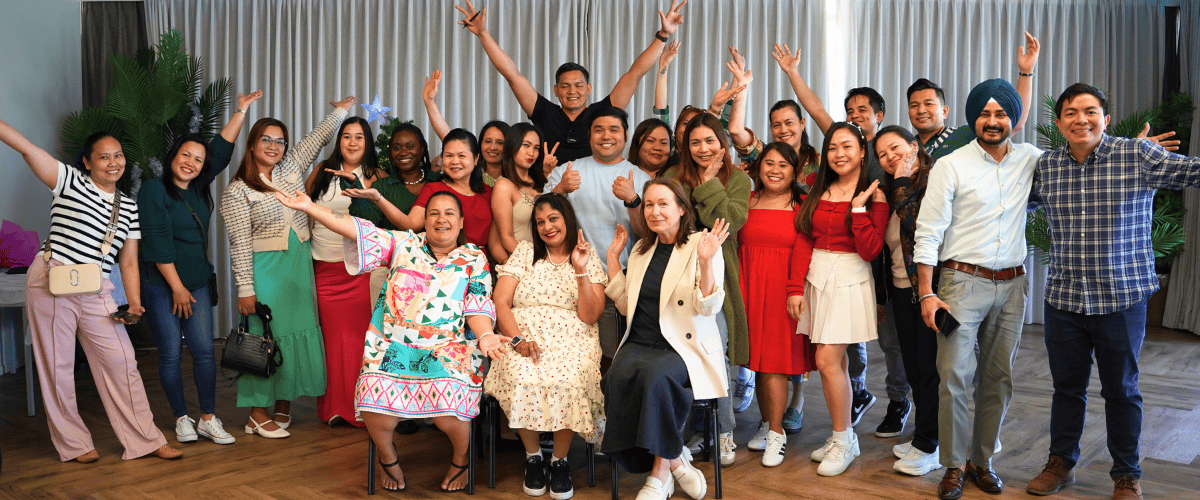
That commitment to continuous learning is embedded in the NZ Certificate in Health and Wellbeing – Advanced Care and Support (Level 4). The programme develops a broad range of competencies, including leadership and conflict management, practical care skills such as safe hoisting techniques, and analysis of Ministry of Health standards. Learners also build a strong foundation in culturally responsive care, grounded in models such as Fonofale and Te Whare Tapa Whā, the Māori model of care.
Community support worker Sonny Jr Ismael says the programme has transformed the way he communicates with clients, particularly when language barriers are present. “I’ve learned how to manage conflict properly, how to de-escalate situations, and how to build trust with clients,” he says. “At the end of the day, it’s about compassion and understanding what someone else is going through.”
Pillay says cultural responsiveness is a core focus of the programme — which is especially pertinent for NZSE’s diverse learner cohort. “Our students come from everywhere, from the Philippines to Nigeria,” she says. “It’s vital they understand the Three P’s: participation, protection, and partnership, and how these show up in day-to-day care.”
She explains that cultural competency is strengthened through understanding Indigenous values and worldviews. “Many learners don’t initially realise the significance of tikanga Māori or Pasifika practices — for example, not placing feet or personal items near pillows, or not sitting on beds or tables. At NZSE, we place a strong emphasis on ensuring learners understand and apply culturally appropriate care for every resident.”
Pillay is widely recognised within NZSE for creating a supportive, family-like learning environment and for ensuring no learner is left behind. In 2023, she received the Le Moana Mua Award for her outstanding support of Pasifika learners. In 2025, she was also shortlisted in both of Ako Aotearoa’s literacy and numeracy award categories, with judges acknowledging her dedication and holistic approach to learner support.
Her learners echo that praise. “Vijay teaches in a really unique way,” says Sonny. “She’s not just focused on theory — she challenges us to think differently and apply what we learn in real situations.”
Healthcare assistant Marjorie Mades, who works at Catherine Lodge, says Pillay played a crucial role in helping her balance the demands of work and study. “Vijay was always just one call away,” she says. “She was incredibly supportive and never made you feel like your questions weren’t important.”
For many learners, the programme has sparked new ambition, from stepping into senior roles to taking on greater responsibility in their workplaces. For Josephine, it even inspired the creation of a community charity. Drawing on her learning, she has organised events for older residents in Warkworth to reduce isolation and strengthen social connection.
“It’s still fresh, but the response has been really positive,” she says. “This programme gave me the courage to do it. I realised I had the knowledge and skills to make a difference.”
For those considering professional development, Pillay’s advice is simple. “I highly recommend this programme,” she says. “You can study at your own pace while continuing to work and earn. You’re building your professional toolkit, supporting your family, and making a real difference in people’s lives at the same time.”
Learn more about NZSE College’s work-based learning healthcare programme
here.